Compatibility Between Spouses: Meaning, Levels and Signs of Marital Compatibility
Feelings start a relationship; compatibility is what keeps it going. Here are the seven levels of marital compatibility, and the signs that reveal it from the getting-to-know-you stage.
Abdullah and Sarah met through the Melkah marriage app (Melkah)and before taking any serious step, they spent enough time getting to know each other, discussed their expectations of married life, and made sure their values and future goals were in harmony. Today, years into their marriage, their relationship is still built on respect and mutual understanding, despite all the challenges any family goes through.
On the other hand, Mohammed and Alanoud got together through one of the ways of meeting for marriage traditional ones, through their families, without a real chance to get to know each other's personalities or make sure they were compatible. Soon after the wedding, they discovered fundamental differences in their way of thinking, values and lifestyle, and their relationship ended in separation after a short time.
The two stories sum up an important truth that many overlook when thinking about marriage: marital success isn't built on feelings alone; it depends mainly on how compatible the spouses are in many aspects of their lives. So how does this compatibility shape the way partners communicate, their ability to resolve disagreements, and the long-term stability of the family? And how can compatibility, or its absence, be the main reason a marriage succeeds or fails?
So, before you take the first step on the path to marriage, you need to understand what marital compatibility means, its levels, and the signs that show it's there, and how they directly affect the marriage and its success.
What Compatibility Between Spouses Means
Marital compatibility is a state of harmony and closeness between the two partners in a set of core aspects that affect the continuity of their shared life, from the way they think and communicate to their values, goals and daily habits. It doesn't necessarily mean the spouses are identical in everything; it's natural for partners to differ in some details. What matters is having enough common ground that these differences enrich the relationship instead of becoming a constant source of conflict.
Marital compatibility has several levels, such as intellectual, emotional and spiritual compatibility, among others, and they don't all need to be met to the same degree for the relationship to succeed. A couple may be highly compatible emotionally and intellectually while differing somewhat on another level, such as personal tastes, without that fundamentally affecting the stability of the relationship. What matters is that their overall compatibility is enough to build a healthy, stable relationship.
It's important to note that compatibility between two people doesn't appear all at once; it becomes clear gradually over time and through ongoing interaction, and it has signs you can notice from the getting-to-know-you stage, such as easy conversation, a feeling of comfort, and similar visions for the future. We'll go through these signs in detail later in this article.
The Core Levels and Criteria of Compatibility in Marriage
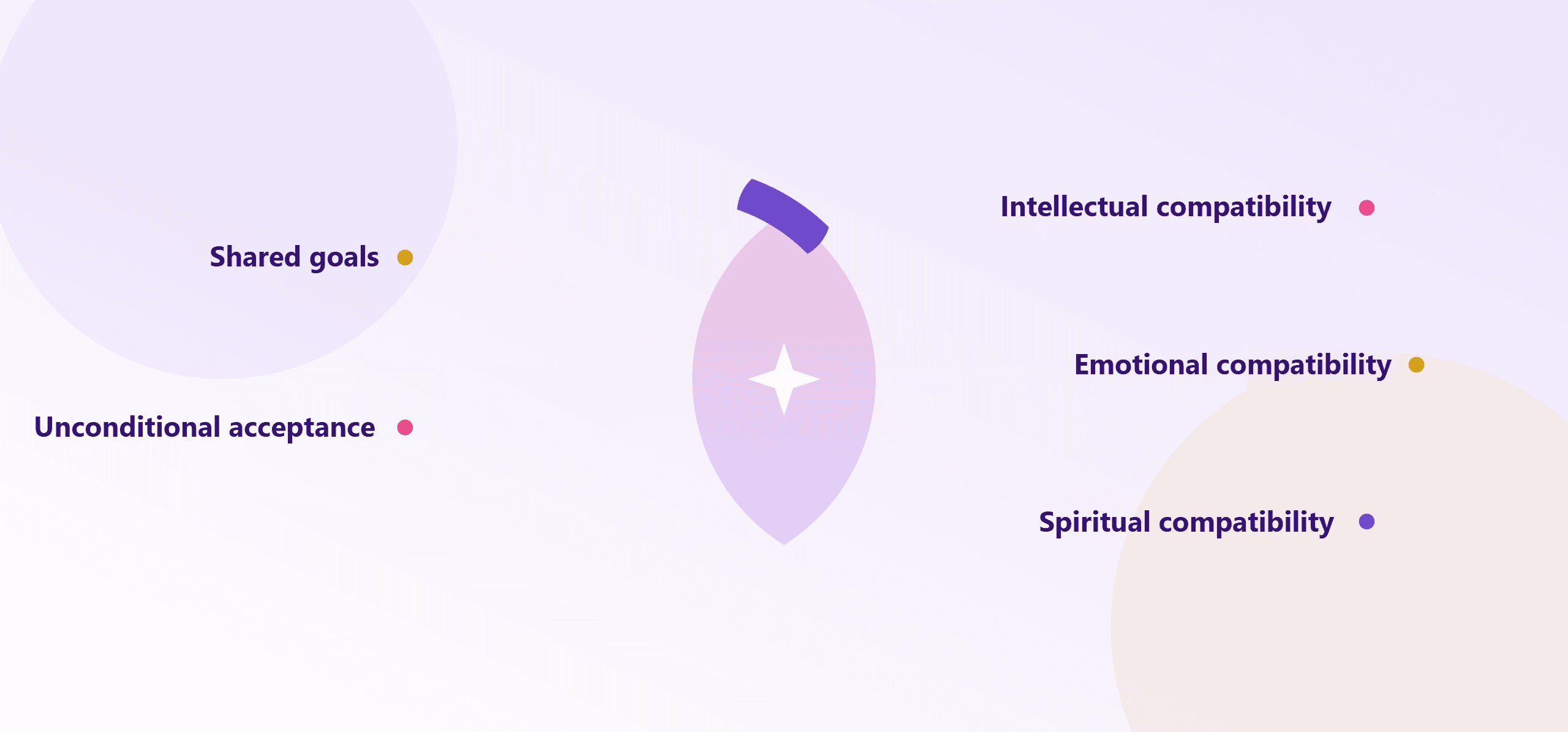
Marital compatibility rests on several core levels. There's intellectual compatibility, which depends on how similarly the spouses think and solve problems, and emotional compatibility, one of the most important levels of all in a marriage, since it forms the foundation on which every other aspect of the relationship is built. Spiritual compatibility determines how close the spouses are in the religious values and life principles that guide their decisions. Overall, compatibility is reflected in the quality of communication between the spouses, their ability to get past disagreements, and the long-term stability of the family.
Here is a list of the levels of compatibility in a marriage:
- Physical compatibilityConcerns first impressions, general appearance and physical attraction between the two.
- Compatibility in tastesCovers shared interests, hobbies and each person's preferred daily lifestyle.
- Spiritual compatibilityMeans closeness in the religious convictions and spiritual values each person builds their life on.
- Intellectual compatibilityRefers to similar levels of education, ways of thinking and decision-making styles.
- Emotional compatibilityReflects the ability to understand the other person's feelings and respond to them sincerely.
- Intimate compatibilityConcerns harmony in the couple's intimate relationship and each partner's needs.
- Unconditional compatibilityEach partner accepting the other as they are, without trying to impose conditions to change them.
Below is a detailed explanation of each level of marital compatibility, to help you assess your relationship with a partner before making any serious commitment.
1Physical Compatibility and Its Effect on Attraction Between Spouses
Physical compatibility is the first thing anyone notices when getting to know someone; it's about visual attraction and the first impression each leaves on the other. Although this type of compatibility may seem superficial compared to the other levels, it helps build the initial attraction that encourages both people to keep getting to know each other. But relying on it alone is a common mistake, since first impressions can change over time, and appearance alone isn't enough to keep a relationship going. That's why specialists advise against making physical compatibility the main criterion for deciding to marry; it should remain a supporting factor alongside the deeper levels of compatibility that determine the quality of the relationship in the long run.
2Compatibility in Tastes and the Couple's Shared Interests
This type of compatibility shows in the spouses' shared interests, hobbies and ways of spending free time. For example, if one spouse loves traveling and exploring new places and the other enjoys the same, it creates a shared space of enjoyment and understanding. On the other hand, imagine a couple where one loves reading and quiet, while the other always prefers going out and social occasions. This difference isn't necessarily an obstacle, but it requires flexibility from both to find common ground, such as setting aside time for the activities each one loves, instead of trying to impose a single pattern on the whole relationship.
3Spiritual Compatibility and Shared Religious Values Between Spouses
Spiritual compatibility concerns how close the spouses are in their religious frame of reference, moral values and the principles on which they base their life decisions. It's one of the most important levels, giving the relationship a deep inner stability, as it helps create a shared language in raising children, handling different life situations, and setting family priorities. Spouses who share the same spiritual convictions often find mutual support in living by them, while a big difference in this area can become a source of constant tension, especially when making life-changing decisions about the family's lifestyle or raising children in the future.
4Intellectual Compatibility and a Shared Way of Thinking Between Spouses
- Intellectual compatibility shows in the spouses' ability to discuss different ideas and topics in a way where each respects the other's opinion.
- It also shows in a similar level of awareness and interest in personal and intellectual growth on both sides.
- It's reflected in how problems are solved, as intellectually compatible spouses tend to discuss solutions logically instead of arguing emotionally.
- It helps build healthy dialogue within the family, especially when making joint decisions about the future.
5Emotional Compatibility and Its Role in a Stable Marriage
Emotional compatibility is each partner's ability to understand the other's feelings and express their own sincerely and clearly, without fear of judgment or rejection. This level is one of the most influential in a marriage's success, because it gives both partners a sense of emotional safety and mutual support in all circumstances. When one spouse feels sad or stressed, having a partner who can listen and respond with empathy is key to getting through crises together. Without this type of compatibility, even if there is compatibility in other areas, the relationship may lack the emotional depth it needs to stay healthy and stable in the long run.
6Intimate Compatibility Between Spouses
This is one of the most sensitive aspects of compatibility, yet also one of the most influential on the stability of a marriage. Harmony here doesn't happen automatically just by getting married; it needs frank, open communication between the spouses about each one's needs and expectations. We advise couples not to be shy about discussing this topic openly and with mutual respect, as understanding in this area is no less important than intellectual or emotional understanding, and ignoring it or letting misunderstandings build up can, over time, become a real source of tension that affects other areas of the marriage.
7Unconditional Compatibility and Accepting Your Partner as They Are
This level represents the peak of maturity in a marriage. It means each partner accepting the other with their qualities and flaws, without constantly trying to change their personality or impose conditions on them. It doesn't mean overlooking mistakes or the absence of constructive criticism; it means having a solid base of respect and appreciation that makes each partner feel safe in the relationship, free from the constant feeling of having to prove themselves or change to please the other. This type of compatibility usually develops over time and through shared experiences, and it's one of the strongest factors of marital stability in the long run, because it gives the relationship enough flexibility to withstand hard times without shaking its foundations.
Signs of Real Compatibility Between Spouses
You can notice real compatibility between two people from the early stages of getting to know each other, through a set of behavioral and emotional indicators that reflect how well they get along. Real compatibility doesn't only show in words; it also shows in how they interact day to day and handle different situations, whether simple or complex. And having these signs doesn't necessarily mean there are no disagreements at all; it's natural for differences to arise in any relationship, but the difference lies in how they're handled. Here is a list of the most notable signs of real compatibility between spouses:
Try it now: which of these signs do you see in your relationship?
Signs you selected: of 6
A sign that doesn't apply today isn't a final verdict, but it's a topic worth a calm conversation before any decision.
On Melkah, getting to know each other starts with the intention of marriage, and you can talk with the other person and get to know them calmly before any step, with the option of involving your family through family accounts. That kind of serious introduction has led to 4,500 successful marriage stories.
Discover MelkahConclusion: Compatibility as the Foundation for the Decision to Marry
Many stories, like Abdullah and Sarah's compared with Mohammed and Alanoud's, prove that compatibility between spouses isn't a luxury or a minor detail; it's the foundation on which a successful, stable marriage is built. When there's real harmony intellectually, emotionally and spiritually, the relationship is better able to face challenges and adapt to life's changes. Without that compatibility, a gap often opens that widens over time, however strong the feelings were at the start. So knowing yourself well and taking enough time to get to know your potential life partner are two essential steps before deciding to marry, and that's exactly what the Melkah app provides through a safe environment that gives both people a real chance to discover how compatible they are before committing.
Compatibility isn't measured by how many things you agree on, but by your ability to live respectfully with the things you differ on.
FAQ
What causes incompatibility between spouses?+
There are many causes of incompatibility between spouses, including marrying without a sufficient getting-to-know-you period, differences in core values and principles, weak communication and openness between the two, a big gap in future goals or lifestyle, and an inability to express feelings and needs clearly.
What questions test compatibility between spouses?+
Typical questions before marriage for testing compatibility cover themes such as: What are your priorities in married life? How do you handle disagreements? What do you think about dividing roles in the family? What do you expect from a life partner? And how do you make important decisions? These questions aim to reveal how close the two are in their thinking and values.
How does a personality types test MBTI help determine compatibility between spouses?+
Taking an MBTI personality test MBTI helps reveal how each person thinks, makes decisions and deals with emotions, giving both a deeper understanding of each other's nature. That understanding makes it easier to anticipate likely points of harmony and difference, and helps them communicate more consciously instead of entering a relationship without really knowing how the other thinks.